Martinborough Wastewater Treatment Plant – Stage 2 Improvements
The project
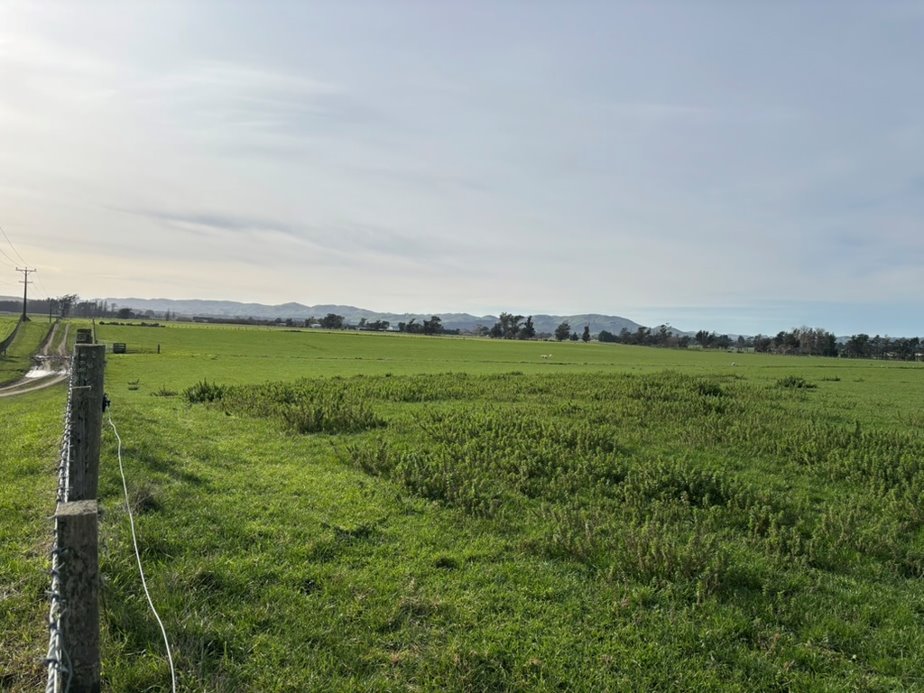
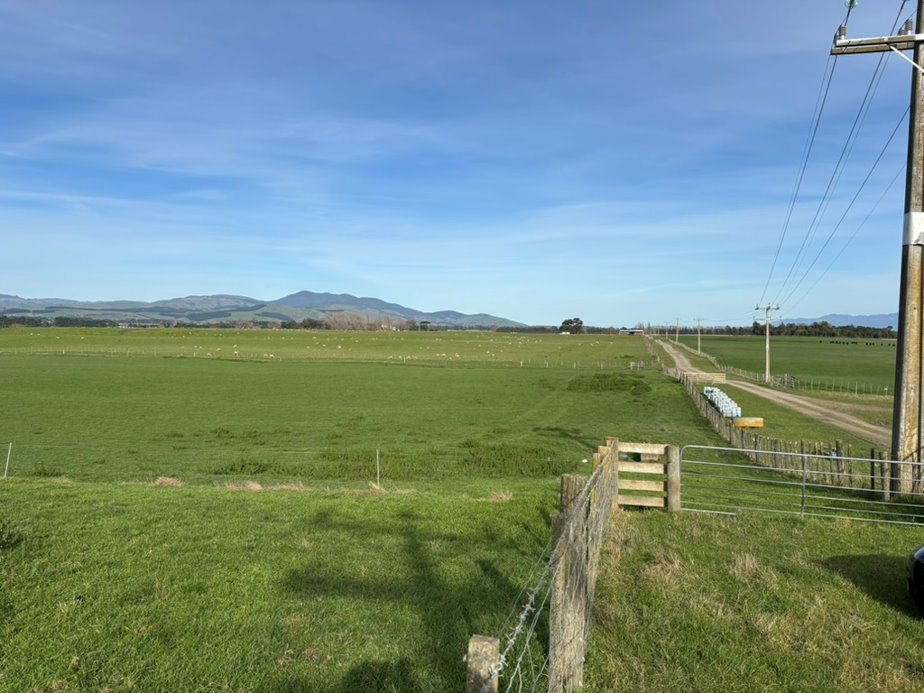
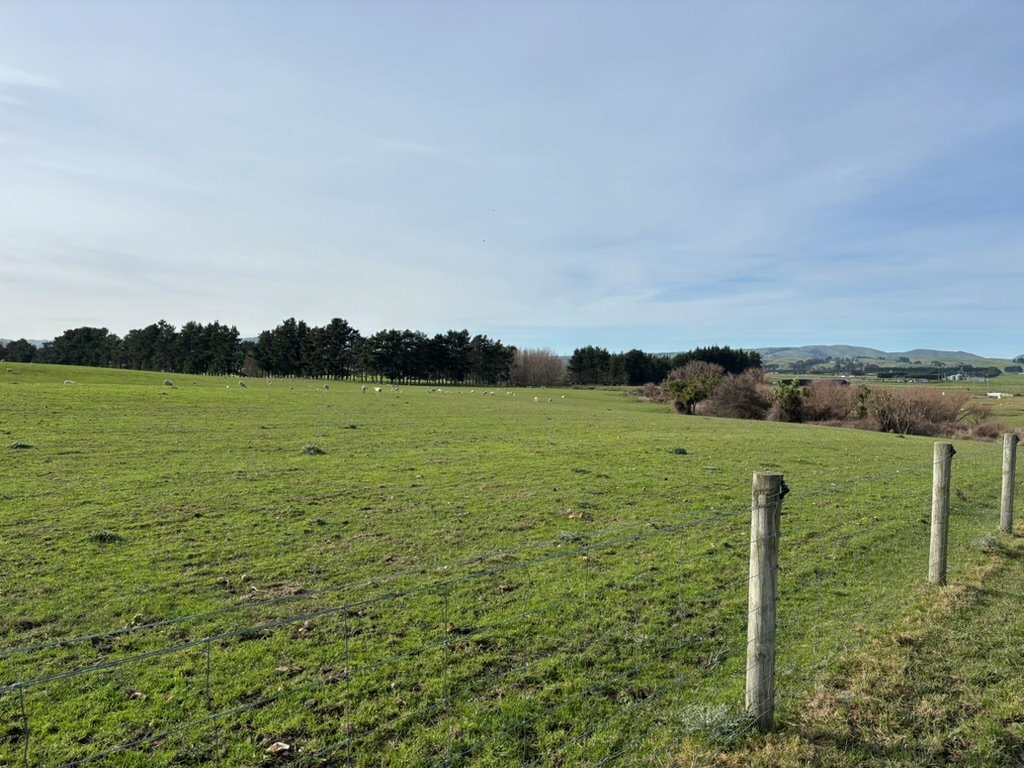
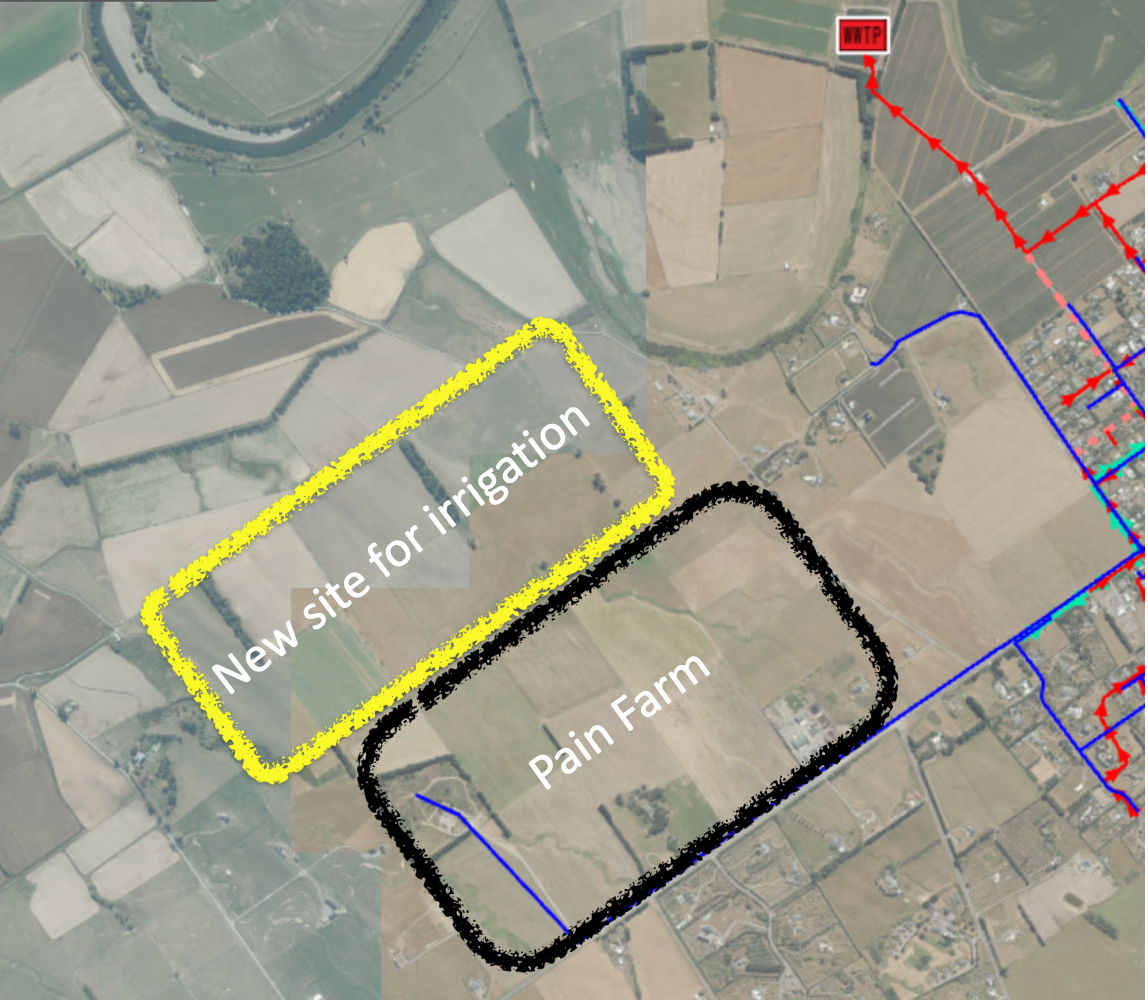
South Wairarapa District Council recently purchased land north of Pain Farm for the intended purpose of irrigating treated wastewater from the Martinborough Wastewater Treatment Plant (MWWTP) to land.
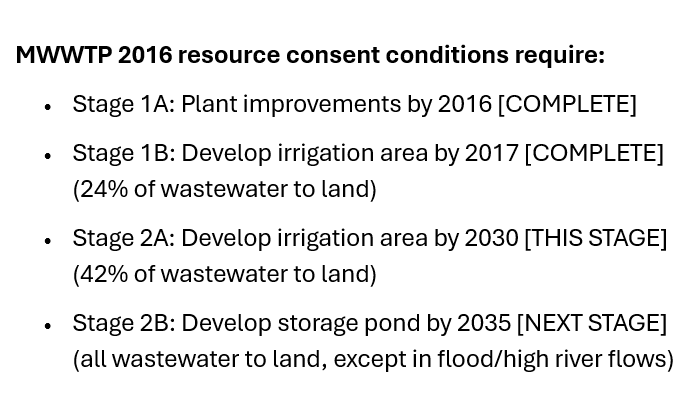
This is because it is an obligation of the existing resource consent for the MWWTP to discharge treated wastewater to land by 2030. It is also an important step in sustainable treated wastewater management for our community – we want to be part of cleaning up the Ruamāhanga River and Wairarapa Moana. Council is also doing physical improvement works at the MWWTP to improve the quality standards of wastewater discharge and ensure resource consent condition compliance.
The proposed new site is closer to the MWWTP and has features that make it better suited to accommodate treated wastewater in an environmentally sensitive way. Ahead of detailed design, the Council is seeking input regarding preferred design features of the proposed irrigation area including planting.
The next step involves a change to the 2016 resource consents, to delete references to Pain Farm as the irrigation area, and an application for a new discharge consent to authorise irrigation of treated wastewater to the new site.
The desired outcome of this work is that steady progress is made towards discharging treated wastewater to land in preference to the Ruamāhanga River and that the MWWTP operates within its resource consent conditions, facilitating growth.
Resource consents
- Decision report: Martinborough Decision – FINAL
- Conditions: WAR120258-Martinborough-WWTP-Consent-Conditions
Concept design
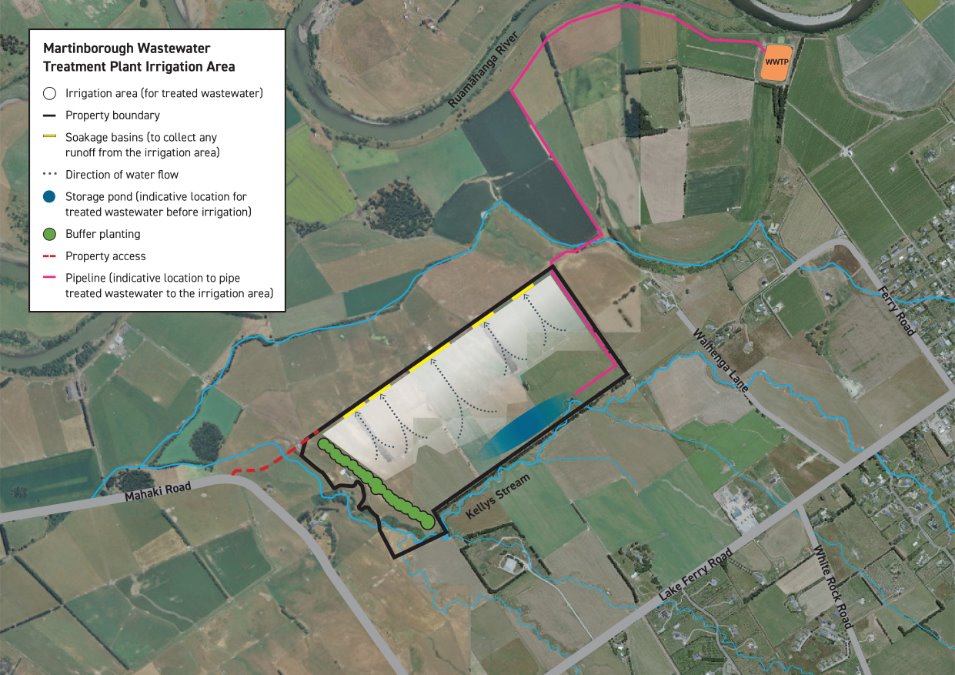
The irrigation concept design is to irrigate the north-western part of the site and position the storage ponds on the southern part of the site with the edges of the pond planted. The land area is approximately 74ha and existing tile drains are in use to drain the western catchment. The tile drains sit under the soil surface and are used in the area to move excess water away from the soil to enhance growing conditions. Below the tile drains is a clay pan at about 1m below (LUC 3 silt dominated Pallic Soils with a pan at ~1m). The clay pan serves as an additional barrier to water soakage.
Kelly’s Stream is on the eastern and southern boundaries of the site, which means that treated wastewater is being directed away from natural waterways.
How it works
With this arrangement, the intention is to irrigate at a rate where the water is generally held in the soil and nutrients are taken up by grass. Excess water will percolate through the soil (being cleaned as it goes) and will be collected by the drains which convey this water to planted soakage basins. These soakage basins further naturally clean the water and allow evaporation and soakage to ground. This process is designed for no treated wastewater to enter groundwater. The storage ponds serve to buffer continuous low supply, with occasional more rapid irrigation rate as conditions allow.
The site and design allow for later implementation of Stage 2B (a larger storage pond), which once developed will mean that discharging treated wastewater to the Ruamāhanga River will stop, except in high water/flood events. Stage 2 is designed to accommodate ‘high’ growth projection in the Spatial Plan.
Irrigation area – site characteristics
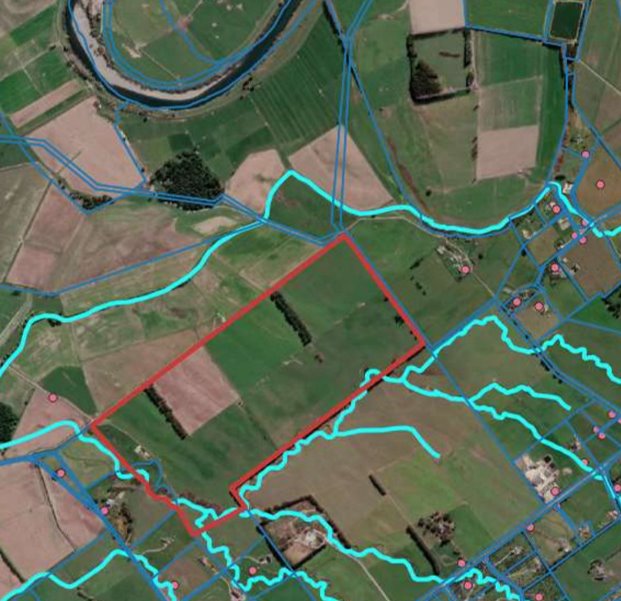
- Approximately 74ha
- Existing tile drains are in use to drain the western catchment
- LUC 3 silt dominated Pallic Soils with a clay pan at ~1m
- Kelly’s Stream on eastern and southern boundaries
- Above the flood plain
- Nearer to treatment plant
Impact
The use of the irrigation area is like regular farming activities with normal levels of traffic movements associated with cut and carry operation, such as mowing and baling every 4-6 weeks, plus weekly monitoring. The concept design includes wind cutoffs and buffer areas to deliver the amenity standards of no odour and no spray drift at or beyond the boundary. Native planting is proposed between the irrigation area and the residential properties to the south and southeast, which will reinforce these measures and further ensure that there is no spray drift and odours beyond the boundary of the irrigation area. We will discuss opportunities to establish this planting early with local residents.
Programme
February 2026 to early March 2026 – Engage with the community
April 2026 – Finalise design and lodge RMA applications
Implement improvements early 2027 (subject to consents being granted)
The details
The following improvements to the Martinborough Wastewater Treatment Plant are planned:
- Council is obliged under its resource consent to discharge treated wastewater to land. These improvements will eventually allow all treated wastewater to be discharged to land, apart from in exceptional circumstances, such as a significant flood event.
- Physical improvement works are also being implemented at the Martinborough Wastewater Treatment Plant that will improve the quality standards of wastewater discharge.
What is the reason for doing this work?
In 2012, Council adopted a wastewater management strategy to gradually upgrade district facilities, and to shift from discharge to river to discharge to land. This strategy underpins the Martinborough Wastewater Treatment Plant’s 2016 resource consent which requires all wastewater to be discharged to land by 2035 (except in exceptional circumstances).
The planned work will help ensure that the Martinborough Wastewater Treatment Plant can accommodate residential development and growth to at least 2050, and it will remove one source of pollution from the Ruamāhanga River.
The 2016 resource consents authorised irrigation of treated wastewater to Pain Farm. However, this is no longer a viable option (see below) and now the Council is investigating irrigation of treated wastewater to land to the north of Pain Farm. This will require a change to the 2016 resource consents, which specifically refer to Pain Farm, and new consents to authorise irrigation at the new site will be needed.
What exactly is being proposed?
- The existing wastewater treatment plant receiving wastewater from Martinborough will be upgraded so that the treatment in the plant includes inlet screens for large object removal, bioreactor tanks for nitrogen removal, and a more powerful UV unit for improved disinfection.
- A pressurised pipe will be laid from the plant, and the tertiary treated effluent will be pumped along this pipeline to a lined storage pond on the new site. The liner is likely to be ultraviolet resistant high-density polyethylene over geotextile cushioning layer, with welded and tested seams to avoid leaks and be suitable for varying water level.
- The effluent will be irrigated to the surrounding land when the soil is sufficiently dry for the plants on the land to take it up.
- The whole system, including the transfer pumps, will be electronically controlled and monitored to ensure automatic shut down under high wind, low pond level or high soil moisture circumstances.
Why is Council no longer considering Pain Farm?
For a number of reasons, including community concern about the intent of the original bequest of Pain Farm, the Council decided to pursue an alternative option and has been investigating irrigation of treated wastewater to another site nearby.
Is the proposed new site a good location to irrigate treated wastewater to land?
Yes. It is a slightly closer to the Martinborough Wastewater Treatment Plant than Pain Farm. Importantly, it also has features that make it better suited to accommodate treated wastewater. For example, as compared to Pain Farm, Kellys Stream does not run through the property (it is located on the eastern boundary), a large part of the land proposed to be irrigated drains westwards, away from Kellys Stream and the presence of tile drains as well as a clay pan in this area prevent treated wastewater getting into the underlying groundwater aquifer.
Additionally, the new site is sufficiently elevated to be above the floodplain.
Are there other practicable options?
The new site is the closest land to the Martinborough Wastewater Treatment Plant that is located outside of the floodplain, suitably distant from and down-hill of the Martinborough urban area (approximately 1km away) and does not entail a crossing of the Ruamāhanga River. The land was available to the council and is suitable for treated wastewater irrigation.
What is the proposed irrigation method?
- Irrigation at a rate where the water is generally held in the soil and nutrients taken up by grass.
- Any excess water moves down through the soil (being cleaned as it goes) and will be collected by drains under the turf and carried to soakage basins. These basins further clean the treated water and allow evaporation and soakage of remaining cleaned water to ground.
- To ensure that the tile drains work well, they will be checked and repaired as necessary. A new tile drain will also be installed in the northern section of the site.
- No treated wastewater will enter groundwater – the existing underlying clay pan in the soil profile prevents this from happening.
- Site and design include a storage pond to buffer supply of treated wastewater from the oxidation ponds and irrigation. There is space for additional storage to be developed now or in the future. This means that discharging treated wastewater to the Ruamāhanga River will eventually be able to stop (except, if necessary, in high water / flood events).
- The operation at the new site can be scaled to meet requirements, which means it will be suitable for Martinborough’s projected growth to 2050.
We will monitor water volume and quality collected by the drains and the performance of the soakage basins. This data will allow us to modify how much and when we discharge treated wastewater to optimise land treatment at the site, and to make sure things are working as they should be. This monitoring work informs any need to improve performance or, overtime, capacity considerations. This can be done because current calculations show that we need 38 hectares to irrigate treated wastewater to land and the site is 74 hectares in size. Alternatively, or as well as, we can build bigger storage ponds, and/or larger soakage basins.
What can property owners in the surrounding area to the new site expect?
We will use the following methods to manage potential residential amenity (odour and spray drift) effect:
- No discharges within 25 metres of any boundary (in practice we will be set back much further from the southern and eastern boundaries)
- Irrigation nozzle heights will be a maximum of 1.52 metres above ground level and will not incorporate an ‘end gun’
- Irrigate at low pressure, and medium water droplet size
- Irrigation will stop when wind speeds exceed 12 metres per second (or 7.5 metres per second sustained for a period of 15 minutes) in a direction towards a residential property within 300 metres of the site
- The treated wastewater must have median E.coli concentration of less than 100cfu/100ml
- Monitoring of odour at the boundary of the site
- Shelter trees will be planted along the south-west site boundary.
Our expectations are:
- No odour at or beyond the boundary. This is a condition of the current 2016 consent and there are no records of this not having been met. There will be an Odour Management Plan.
- No spray drift (because of wind speed cut-offs and droplet size) beyond the boundary.
- The irrigation method could be by a central pivot irrigator or another method such as solid set irrigators – this is yet to be decided.
We will have clear odour and spray drift monitoring and complaint processes. In the unlikely event they were to become a problem, the system will be flexible to enable changes, including adjusting where irrigation occurs, wind speeds and direction, and planting.
How and when did the new site become an option for treated wastewater land irrigation?
In 2025, the landowner approached the Council and asked if there was interest in acquiring a part of the farm. The Council undertook a due diligence to determine whether the land could accommodate treated wastewater in the same way planned for Pain Farm. As these investigations were positive, the Council continued with the land purchase and in parallel undertook further site investigations.
Subsequently, in August 2025, the owner’s property was subdivided into 8 lots, with Lots 1 (72.6ha) and 12 (1.42ha) offered to the Council. In early February 2026, title for the new irrigation site was issued and the land purchase was completed.
What investigations have you undertaken to assess the site?
Our investigations at the site have considered climate, groundwater and soil as well as flooding and ecology. The groundwater and soil profile and can be summarised, as follows:
- Soil samples have been taken and analysed in laboratories to determine the volume of treated wastewater that can be held in the soil (this determines the potential volume able to be discharged).
- The amount of treated wastewater that can be discharged at any point in time will depend on the soil moisture content. This is because the soil can only hold so much moisture before it will percolate through and we want to discharge treated wastewater at a rate that means that it is held in the soil so that plant roots can take up the nutrients. This is land treatment.
- We have modelled rainfall at 2050 allowing for climate change so that we can estimate how often and how much we can discharge to the soil. Calculations show that based on what the soil can accommodate (per square metre), to meet the estimated volume of treated wastewater at 2050, we need an irrigation area of 38 hectares.
- Soil profiles show that there is an underlying impermeable clay pan at depths of between 350mm – 700mm below ground level. Water that percolates through the overlying layers is prevented from going deeper to the underlying groundwater aquifer by this pan. Tile drains were installed in the 1960s to drain any excess water and they will be upgraded to drain into planted soakage basins (that we will construct), where water will soak into ground to be taken up by plants and / or evaporate.
Resource Management Act 1991 process
Applications to authorise the discharge by means of irrigation of treated wastewater to land is planned to be lodged later this year. These consent applications are in addition to the held Martinborough Wastewater Treatment Plant consents (WAR120258 [31707, 32044, 32045, 33045]).
Related documents
2016 MWWTP resource consent
Decision report: Martinborough Decision – FINAL
Conditions: WAR120258-Martinborough-WWTP-Consent-Conditions
Documents related to: Martinborough Wastewater Treatment Plant Connections
LGOIMA responses
Pending
Share your thoughts
Council welcomes the communities’ view on this proposal towards preparation of the resource consent application to authorise the discharge by means of irrigation of treated wastewater to land.
Please email martinboroughwwtp@swdc.govt.nz and share your thoughts by answering these questions, by 31 March 2026.
Treated wastewater at Greytown and Martinborough is irrigated to land using a range of measures that minimise spray drift and odour. These include not irrigating during high winds, using low‑pressure spray from no more than 1.52 metres above ground, avoiding end guns, using medium‑sized water droplets, and treating the water to remove pathogens, nitrogen, and phosphorus.
- We propose to use the same measures at this site to irrigate treated wastewater to land as in use in Greytown and Martinborough. Do you have any concerns or suggestions about using this same approach?
- Treated wastewater is currently discharged to the Ruamāhanga River. How do you feel about moving away from this?
- Do you have any concerns related to amenities (such as odour or spray drift), as part of irrigating wastewater to farmland?
- What are your thoughts about the proposed concept design? Please refer to the concept design section above.
- One of the outcomes of this work would enable growth for Martinborough – do you support this?