
Recycling is more than just sorting the cans from the glass, and the cardboard from the plastics. It’s about making sure the recyclable materials we collect can actually be reused.
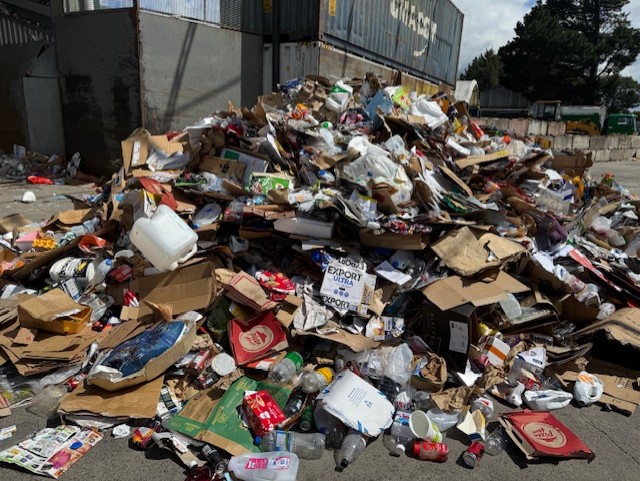
When we recycle correctly, we help protect the environment and reduce landfill. So where does our recycling go?
South Wairarapa’s recycling is sent to Earthcare Environmental’s Material Recovery Facility in Masterton.
Here, it’s hand-sorted for contamination. Then it’s passed through optical sorters, which are high-tech machines that separate plastics by type, and sort steel, aluminium, paper, and cardboard.
This is where the ‘do not squash’ rule comes in.
If you stomp that soft drink can or squash that milk bottle, the scanners in the optical sorters can’t identify what recyclable item it is. Unidentifiable flattened items are separated and then landfilled.
Once recyclable items have been sorted into categories, they are sent off to various places across Aotearoa to be recycled.
Where our recycling ends up
- Batteries go to Up-Cycle, an electronic waste recycling company based in Auckland, where they’re safely processed.
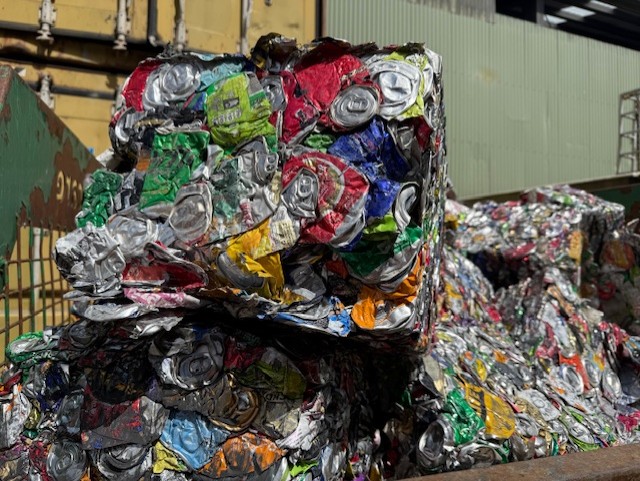
- Tins and cans are sent to Auckland to be made into new steel products.
- E-waste is sent to Wellington, where it’s manually dismantled – this is why there’s a cost involved. Previously, it was shipped overseas.
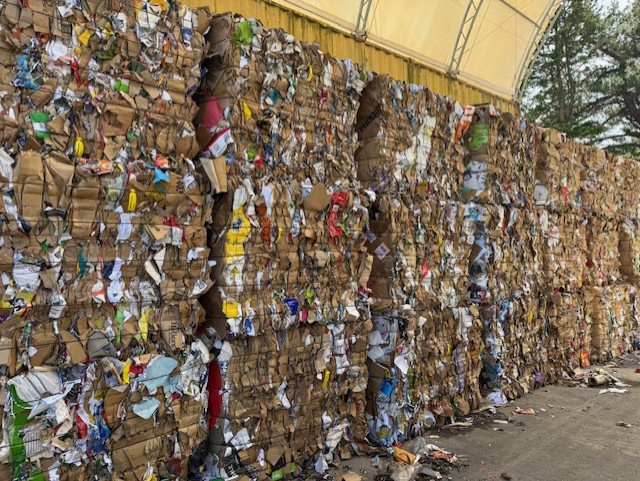
- Paper and old corrugated cardboard is recycled by Oji in Kinleith, South Waikato.
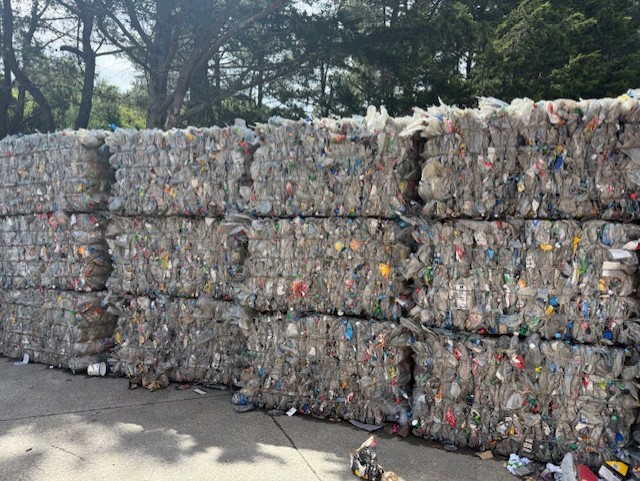
- Plastic HDPE (milk bottles, containers, etc) is sent to Comspec in Christchurch, Aotearoa Plastics in Palmerston North, or Pact Group in Auckland.
- Plastic PET (water bottles, biscuit containers) is sent to Flight Plastics in Wellington. Surplus beyond what Flight can manage is sent overseas as a commodity item.
- Coloured PET (Green and Brown) is sent overseas as a low-value commodity item. It is very hard to recycle coloured plastic.
- Soft plastics are sent to Future Post, a Kiwi company that recycles plastic into fence post products.
- Glass is sent to Visy New Zealand and made into new bottles. Glass can be recycled infinitely!
- Metal is sent to local scrap merchants.
Make sure your recycling is clean
Since China’s National Sword Policy, recycling processors now demand clean, uncontaminated materials. Dirty or incorrect items can cause entire loads to be rejected. That’s why it’s crucial to:
- Rinse containers
- Only include items listed in the standardised recycling guide – Recycle right at kerbside | Ministry for the Environment
- Use your yellow-lidded recycling bin correctly
Did you know?
Most plastics can only be recycled 2-5 times before their quality degrades too much for new products. Each time plastic is recycled, it is heated, which shortens the polymer chains and lowers its strength, which means recycled plastic is often downcycled into lower-quality items like fibre for clothing or insulation rather than new bottles or containers.
Fast facts
Below are some fast facts from our recycling contractor, Earthcare Environmental: wairecycle.nz/what-happens-to-my-recycling/
- 32 milk bottles can be recycled into a recycling crate
- Five 2 litre plastic (PET) bottles makes enough fibrefill for one fleece jacket
- Aluminium cans are melted down and turned into new cans
- Recycling 1 glass jar saves enough energy to run a light bulb for 4 hours!
- Recycling plastic uses half the amount of energy compared to burning it in an incinerator
- For every tonne of paper recycled, 13 trees are saved!
Quick recycling tips
- Don’t squash cans or bottles – flattened items can’t be identified by optical sorters and end up in landfill.
- Rinse containers – dirty items can contaminate loads and cause rejection.
- Only include items listed in the standardised recycling guide – check recycle right at kerbside | Ministry for the Environment.
- Use your yellow-lidded recycling bin correctly – follow council guidelines.
- Keep recycling clean and uncontaminated – processors demand clean materials since China’s National Sword Policy.
- Avoid coloured plastics if possible – green and brown PET are hard to recycle and often sent overseas as low-value commodities.
- Remove lids, these can’t go in your recycling – lids must be separated as they are often made from a different type of plastic to the bottle and are difficult to sort because they are small and light.
Find out more about rubbish and recycling in South Wairarapa on our website: Rubbish and recycling.