
Meet the team behind the scenes of the Foundation and find out how they are using a grant from the Community Wellbeing Fund.
This story is part of a series about people and projects to gain from the Community Wellbeing Fund, distributed by South Wairarapa District Council from a one-off pool of funds from Te Tari Taiwhenua (the Department of Internal Affairs) in 2024.
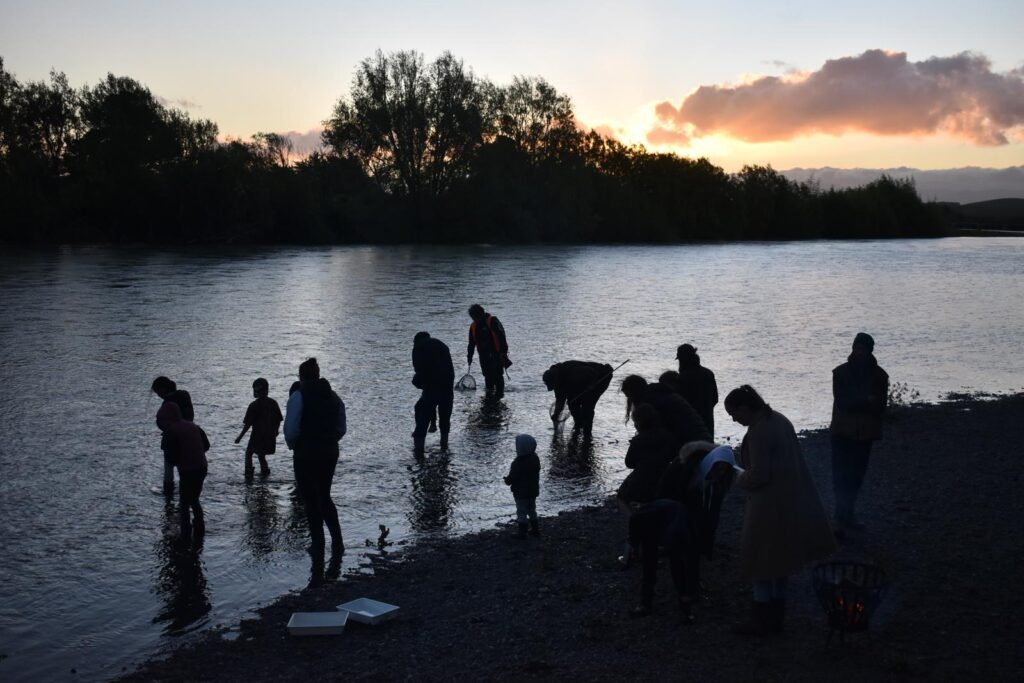
Above: Volunteers working in the Ruamahanga Awa (river) after dark.
Benefits to community and environment
Awa means river in te reo Māori and the health of one of South Wairarapa’s most important awa is at the heart of Ruamāhanga Farm Foundation’s work, revealing why it received a $10,000 grant from South Wairarapa District Council’s Community Wellbeing Fund.
The awa in question is Ruamāhanga River, five minutes’ drive from Martinborough and flanked by the eponymous farm. Funding has enabled the Foundation’s mahi (work) to flow, connecting people with restoration work to the awa and surrounding wetlands, says Jane Riddiford, one of the founders of the Foundation.
Council Grants and Funding Advisor, Lina McManus, says environmental projects in New Zealand are typically underfunded.
“With limited investment available, this is widely reflected in national funding data, which makes the success of this project especially rewarding for the South Wairarapa community and all those involved.”
One of the appeals of this project’s funding application was its accessibility to the community, says Lina.
Jane Riddiford co-founded the Foundation in 2021 with her partner Rod Sugden and sisters Liz and Lucy Riddiford.
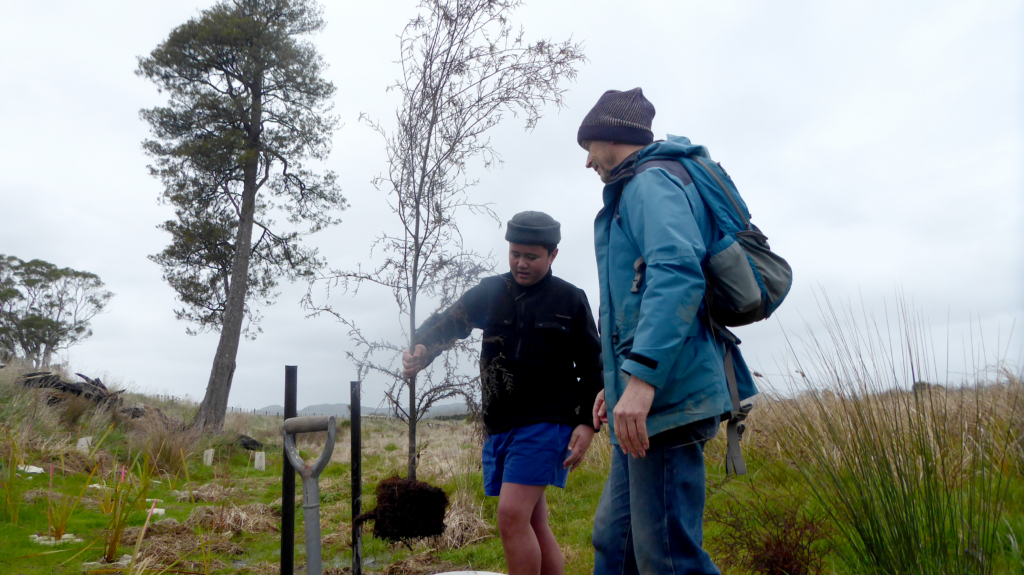
Above: Ruamāhanga Farm co-founder Rod Sugden (right) planting a native tree with Tumanako.
Jane says the resilience of the land and people is key to the Foundation’s work and is tangible work – not an abstract policy goal.
“We had as a society collectively turned our backs on the moana and the river and a strong part of our work is to turn back towards it – ecologically, culturally, even mythically – and ask what it needs now and what we need from it, in return.”
That question sits at the heart of the Foundation’s education work and at the core of why the Council chose to distribute $10,000 from the Community Wellbeing Fund into Ruamāhanga Farm Foundation in late 2024. Funds came from Te Tari Taiwhenua, the Department of Internal Affairs, as part of the Better Off support package associated with the Three Waters Reform. The Fund supports initiatives that deliver measurable, long-term benefits to the community.
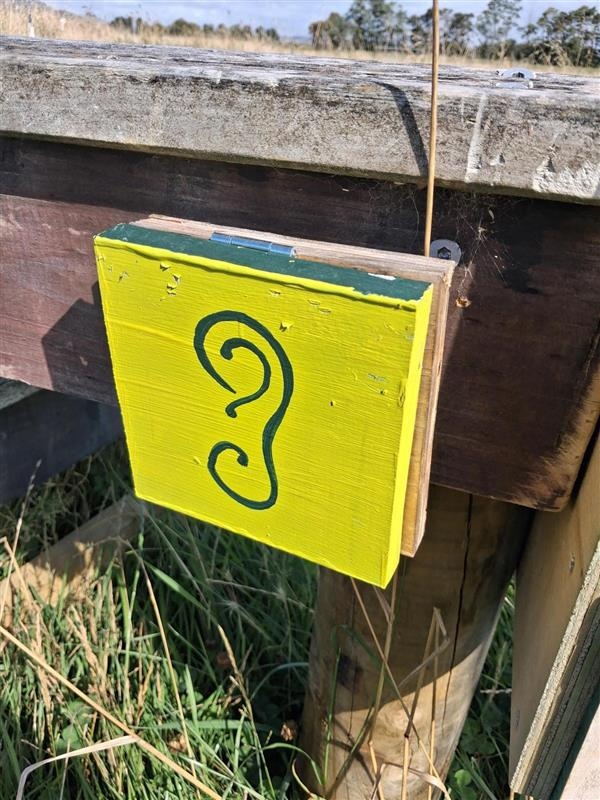
Above: Lifting the lid on listening posts when walking along the river enables visitors to uncover QR codes, which lead to stories and experiences of work to restore wetlands, replace natives and learn more about the importance of the awa.
The Farm Foundation’s work is understanding that environmental resilience and community resilience are inseparable. Jane’s journey into this ethos began in the early 1990s when she co-led the transformation of degraded land in Newton Gully in central Auckland.
The insights she gained shaped her work in London, where she co-founded the award-winning environmental education charity Global Generation in 2004. This later informed her doctoral research in Collaborative Leadership and Organisational Change. After 25 years overseas – and an extended period in Aotearoa during the COVID pandemic – Jane returned to the Wairarapa in 2022 with practical insights and academic research experience to apply locally.
At Ruamāhanga Farm, those insights have taken shape through native revegetation, wetland restoration and education programmes that bring people into a direct relationship with the land. One focal point has been the restoration of an oxbow – an old looping bend of the awa that thousands of years ago became cut off from the main flow. Oxbow wetlands are nutrient-rich, providing critical habitats for fish, birds and insects. They can also act as natural buffers during floods.
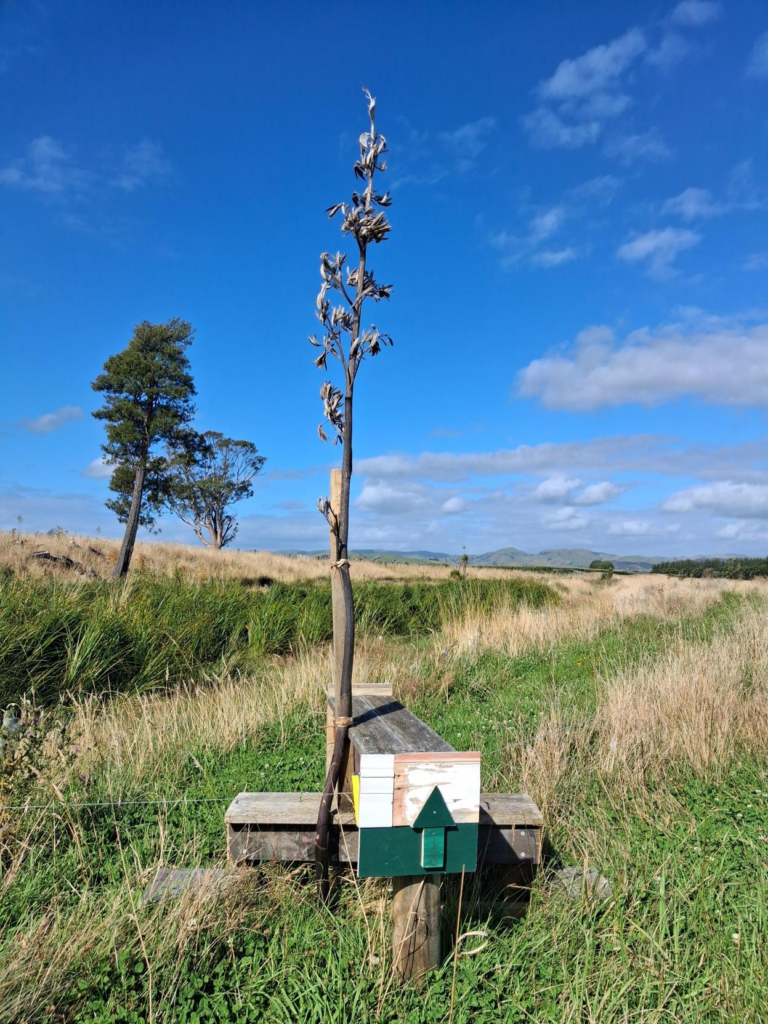
Above: The farm is gaining from native replanting across land, which is transforming its bare fields.
“The oxbow was relatively dry when we began,” says Jane. “Now it holds water and releases it gently without taking precious soil and nutrients. This runs counter to the dominant practice of clearing areas of vegetation and moving water as quickly as possible through a flood spillway. Our farm is part of the Tawaha spillway. Resilience means thinking long-term in connected ways about climate impacts, flood mitigation, biodiversity, food systems and community.”
Learning by doing
Hundreds of young people have been welcomed onto the land to plant trees and wetland grasses, learn about the awa and study the life it supports. The Foundation works alongside the Mountains to Sea Wellington charity and core partner schools: Kahutara, Martinborough, Pirinoa, Featherston, South End Primary as well as St Matthew’s Collegiate and UCOL’s Conservation Courses. Tamariki and rangatahi learn by testing water health, studying the lifecycle of tuna (eels) in the wetland (the population doubled between 2025 and 2026) and understanding the awa’s role as the main artery of the Wairarapa catchment. Trees are eco sourced and sponsored by Trees That Count and Greater Wellington Regional Council. Most are supplied by He Kōtare Nursery in Paetūmokai (Featherston).
Education combines creative writing and art with practical conservation work. This gives young people a chance to experience the te taiao (the environment) in meaningful ways and share those experiences.
Gina Smith, former principal of te kura o te paetūmokai (Featherston School) says “Some tamariki hate writing and when you put them in the bush or beside a river planting trees, suddenly beautiful words come from somewhere deep within. Big thanks to the Foundation for seeing possibilities and giving our young people and their words the opportunity to shine.”
Shared pathways
One bank of the Ruamāhanga Awa is home to a walk and offers a chance to see the Wetland Walk, through the oxbow. Supported by funding from the Greater Wellington Wairarapa Moana Fund and the Pain Farm Fund, along with local businesses and community groups, the walks now include stiles, wayfinding signs and listening posts with QR codes to share the words of children involved.
Living in the project
Jane and Rod live on Ruamāhanga Farm, along with Jane’s mother, Yvonne Riddiford, now in her 102nd year and living in her own house. The land, held by the Riddiford family since 1907, is part of a once larger property. Parcels were subdivided by family and others to create more land for farming. Wetlands were drained and the Lower River Valley Flood Scheme straightened parts of the awa. Like many rural landscapes across Aotearoa, the Ruamāhanga awa was gradually reduced to a functional waterway.
The Foundation is mostly run by volunteers. Jane, Liz, Lucy and Rod serve as trustees; Jane and Rod are paid on contract for their education work, funding dependent. Jane also works as catchment coordinator. It’s an intentionally light structure to allow resources to flow back into the land and community.
How to get involved
Find out more and register online to volunteer in planting days, take part in story walks, school educational visits and the annual Sunflower Festival. ruamahanga.org.nz/events
Ruamāhanga Farm Foundation is a registered charity and is situated at 1415 State Highway 53, Martinborough.