
Did you know that South Wairarapa is home to a nationally significant astronomical landmark?
One of South Wairarapa’s most remarkable heritage treasures has entered a new chapter, with the completion of a protective structure around Carkeek Observatory, south of Featherston.
The observatory was built in 1867 by Welsh-born amateur astronomer Stephen Carkeek (1815-1878) after he retired from public service in New Zealand. It’s not only the age that makes Carkeek Observatory historically significant. It’s the structure itself. Built from local tōtara, the observatory is regarded as one of the earliest surviving examples of Romsey-style architecture, which is characterised as being a lightweight, affordable amateur observatory style popularized in Victorian Britain.
Surviving examples are rare.
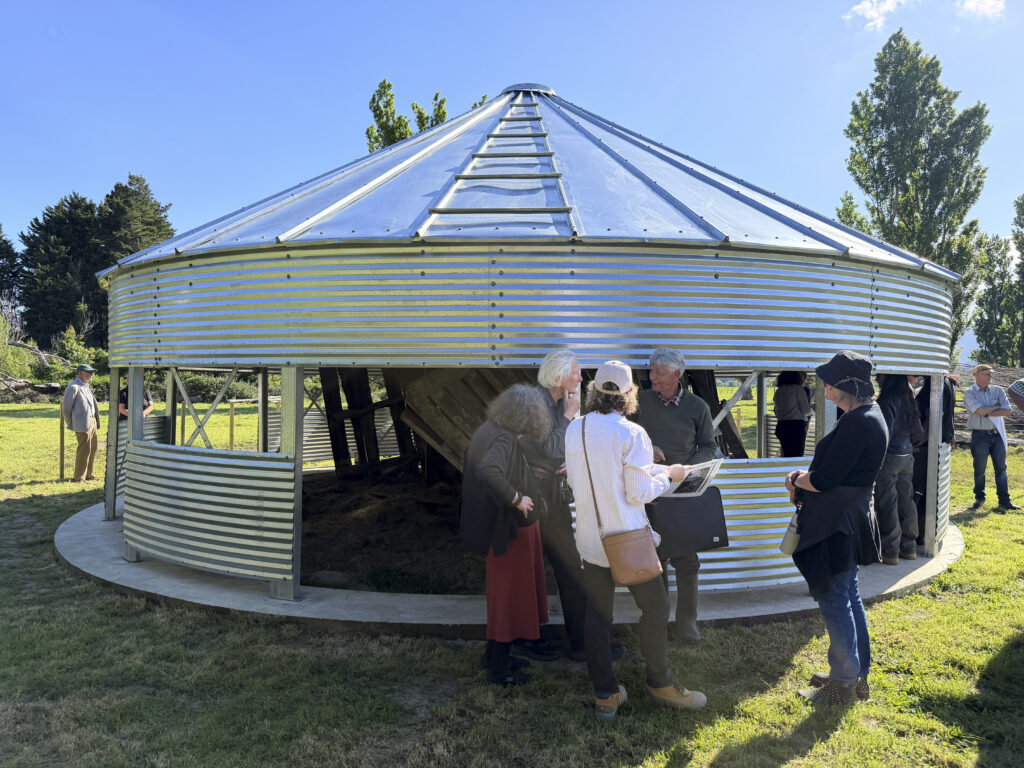
The new structure was completed in early October following fencing and tidying work around the site. A visit was then held on Tuesday 20 October, attended by project partners, archaeologists, descendants of Stephen Carkeek, heritage stakeholders and contractors who were instrumental in bringing the new protective structure – and the old observatory – to life.
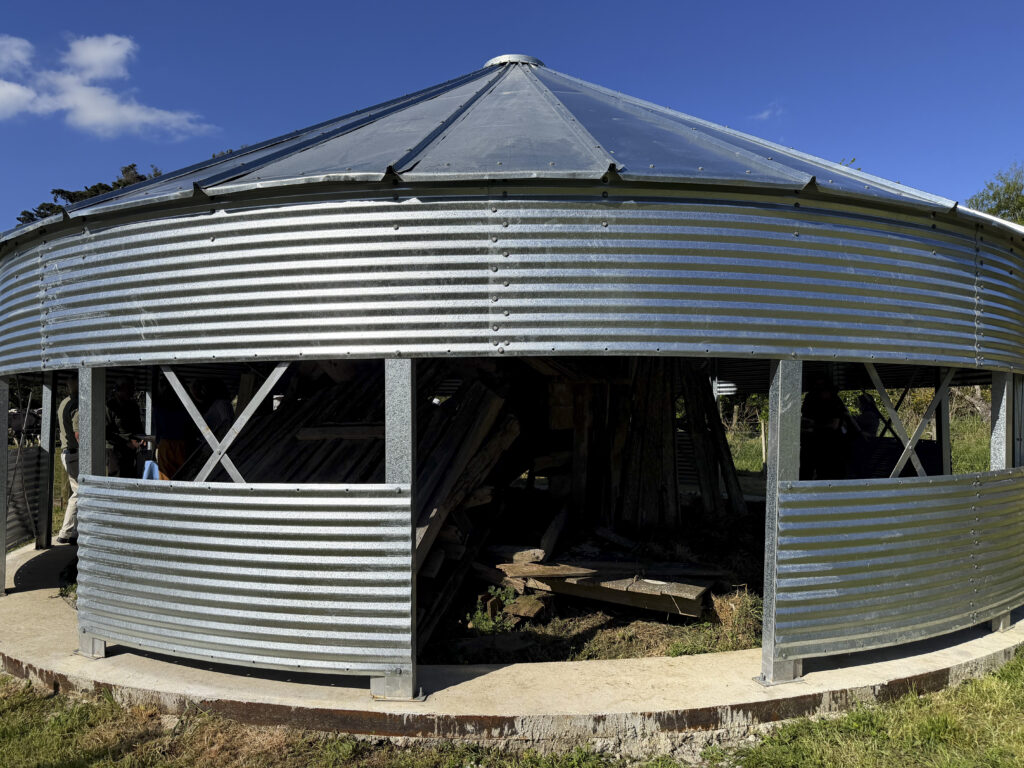
The new structure was inspired by the site’s rural setting and agricultural history. Rather than enclosing the observatory within a conventional shed, the architects opted to develop a concept based on a silo that once stood nearby. The custom-designed structure was fabricated by Dan Cosgrove Silos and assembled on site by Norse Ironworks, creating a sympathetic structure that sits comfortably in the rural landscape.
The project is the result of careful planning to balance heritage protection, archaeological considerations and the need to preserve the remains of the observatory’s original character. It is to the credit of architects Chris Cochran and Russell Murray and archaeologist Sarah Phear that the outcome of this project is so successful.
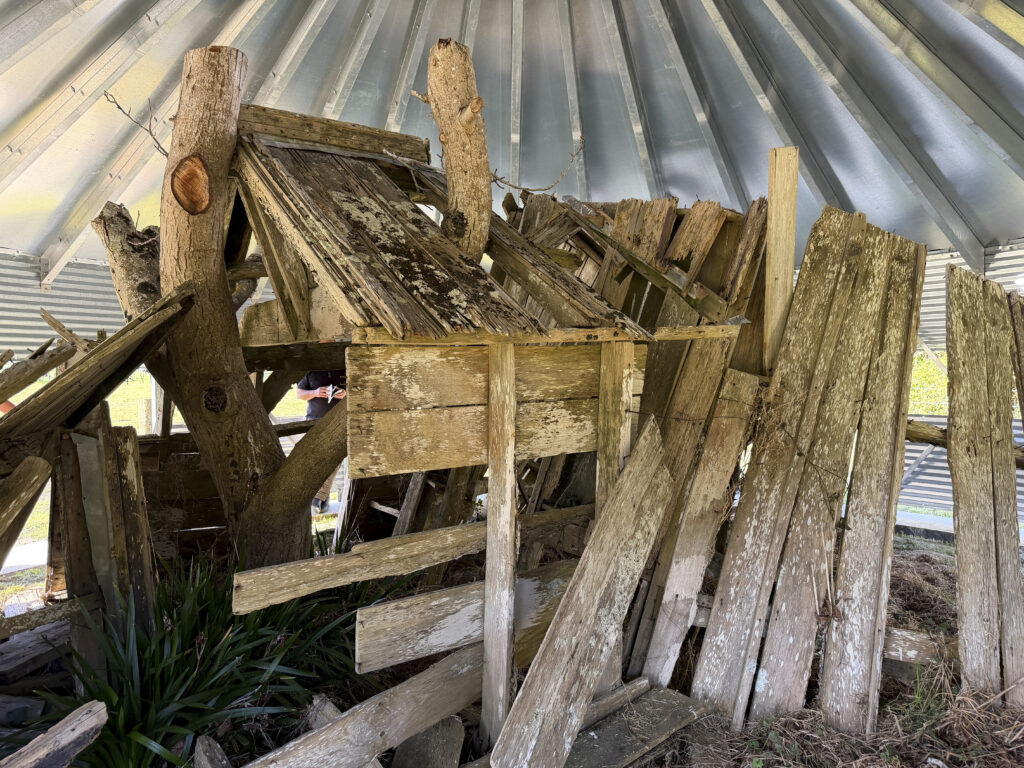
The remains of Carkeek Observatory (pictured above, inside the new protective structure) stand on a working farm, so it is not yet open for public access but the new protective structure ensures this historic landmark is protected from the elements. It can also be safely viewed in managed heritage and tourism initiatives.
While there are currently no firm plans for restoration of the observatory, discussions about its future continue. As a protected heritage site, the next steps will need mindful consideration as there is strong interest in preserving Stephen Carkeek’s contribution to science for future generations.
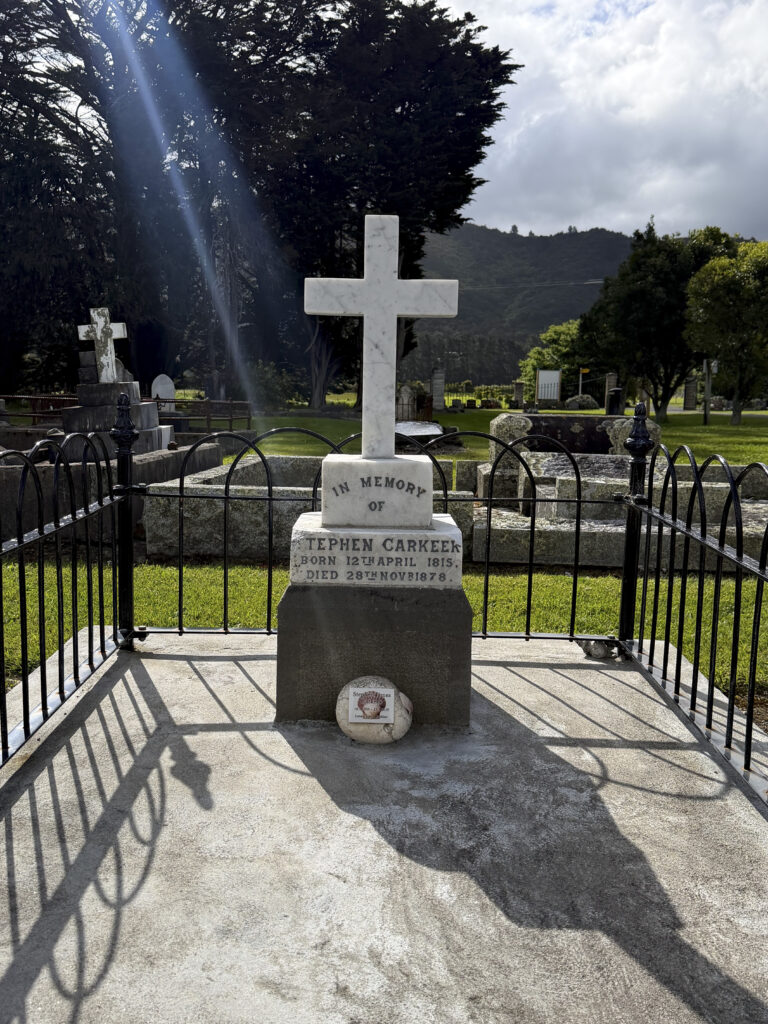
Stephen Carkeek is buried in Featherston cemetery (his tombstone is pictured, above).
The project to build a protective structure around Carkeek Observatory came in under budget.
Major milestone marks visionary astronomer’s life
Stephen Carkeek used the observatory to observe the stars as well as to determine latitude and longitude. His work gained international recognition, particularly in the lead-up to the 1874 Transit of Venus. Following Carkeek’s sudden death in 1878, his records and journals were lost and the property changed ownership with the observatory falling into disuse. It was later repurposed as a farm equipment shed and gradually deteriorated over time. Interest in the site was revived by astronomers and historians during the 1980s and 1990s, leading to renewed efforts to recognise and protect its significance. It was added to the New Zealand Heritage List as a Category 1 Historic Place in 2020.
How to see the Carkeek Observatory
The Featherston Heritage Festival is hosting an event called Carkeek Revealed: A Walk Through Wairarapa’s Astronomical Heritage. This free guided walk is at Pae Tū Mōkai O Tauira Whare on Sunday 15 November 2026. The event will explore the observatory’s history and its place in the region’s scientific heritage.
Looking ahead, opportunities to weave the Carkeek Observatory into Wairarapa’s tourism events are being explored.